 7 months ago
The Trump administration has nominated Jim O’Neill as the new head of the National Science Foundation (NSF). The NSF, an independent federal agency, distributes billions in funding to researchers and research institutions around the country. It’s one of the most important parts of the federal scientific enterprise.
Unfortunately, the agency has been without a permanent head since April of last year, when director Sethuraman Panchanathan resigned amid a flurry of funding cuts, grant terminations, and staff departures. Since then, the Trump administration has announced a restructuring that, according to Science’s Jeffrey Mervis, has allowed them to take control of NSF, while also announcing plans to dismantle the NSF-sponsored National Center for Atmospheric Research, a critical research center that since its inception in 1960 provides enormous benefits to our public safety, national defense, and economy.
If O’Neill is confirmed as NSF’s director, the Trump administration will further tighten its control over an agency created by Congress to be independent in its work to advance science. This would be a sharp divergence for an agency that has long been buffered from the political interference in science that other federal agencies regularly experience. The Senate should work to block this nomination. Here’s why.
A threat to a world class science agency
We all benefit from a robust, well-funded, and independent science agency that can invest in both breakthrough research and exceptional people who can explore, question, and create. As my colleague UCS senior scientist and former NSF fellow Carlos Javier Martinez has said, “For the past 75 years, the NSF has quietly powered innovations that shape our daily lives, from the classroom to the smartphone, from the weather report to the internet… NSF accounts for only 0.1% of federal spending but supports roughly a quarter of all federally funded basic research at US colleges and universities.” In other words, NSF is a public good that drives innovation to help people thrive and stay healthy and safe.
In my own work, I am proud of the support NSF provided to me during my graduate education for me to explore research ideas tied to climate and management impacts in rangeland ecosystems, and their connections to people’s livelihoods. In addition, NSF invested in early career scientists like myself to explore the intersection of science for policy, and policy for science. I am forever grateful for NSF and the opportunities it has afforded me, and the profound impact it has had on my professional and personal trajectory.
Stories like mine and thousands of others reflect the kinds of investments that fuel the future of science and technology in this country. Unfortunately, the Trump administration’s destruction of science agencies threatens these and other federal programs that invest in science and scientists for the nation.
A hazard to federal science and health agencies
O’Neill would be the first head of NSF who wasn’t a scientist or engineer. Before he’s put in charge of this absolutely vital agency, he should have to explain his understanding of what independent science means and why it’s worth protecting. In particular, O’Neill must publicly commit to upholding the values and mission of NSF. This should be required for any agency head, but is especially important for O’Neill because of the Trump administration’s track record of interfering in federal science and because of the track record of O’Neill himself.
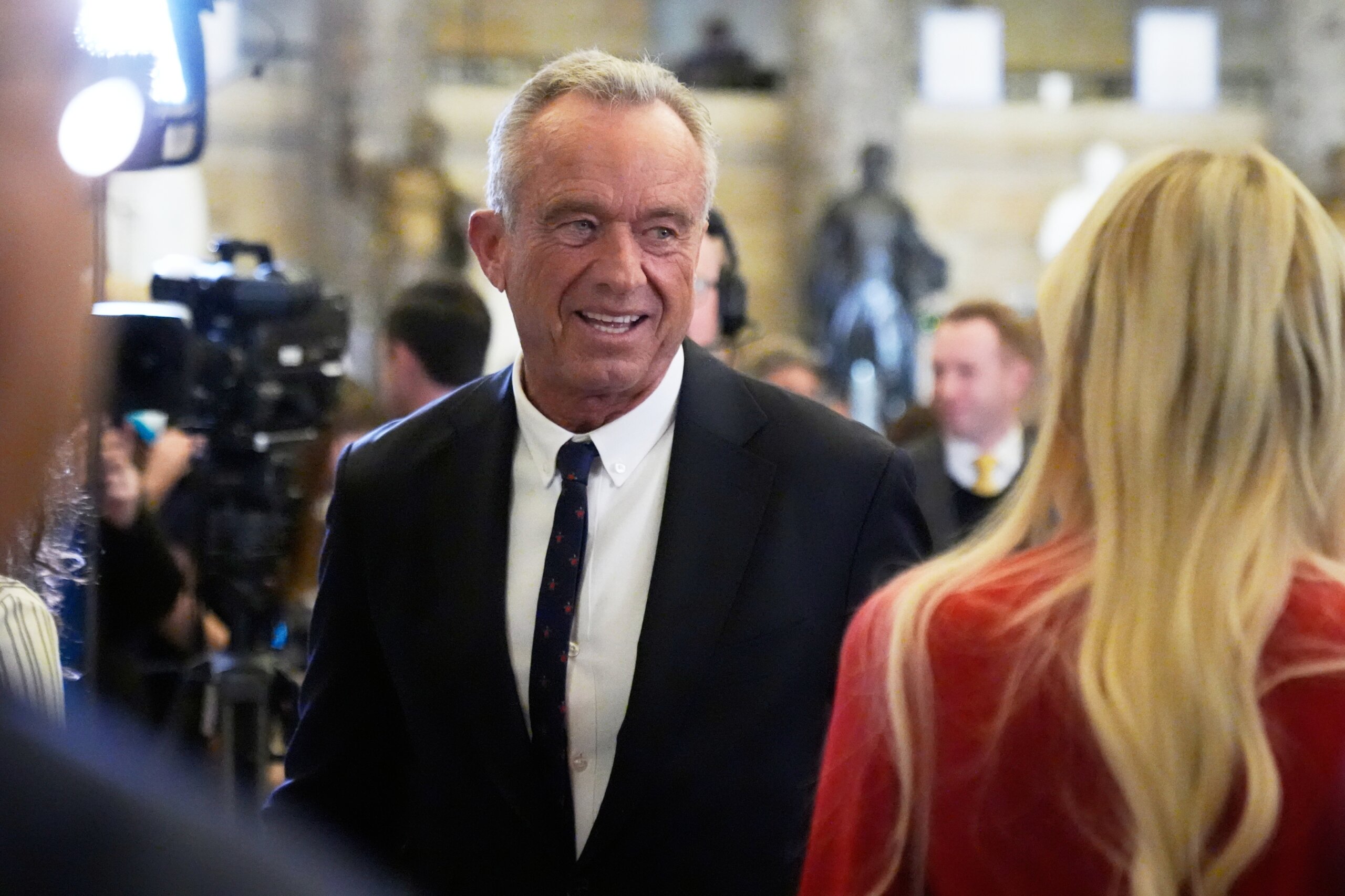
O’Neill’s most recent job was Deputy Secretary of the US Department of Health and Human Services (HHS), as well as temporary acting director of the Centers for Disease Control and Prevention (CDC) after former head Susan Monarez was forced out. As such, he was a key actor implementing Secretary Robert F. Kennedy Jr.’s radical and reckless overhaul of the agency. O’Neill authored the HHS memo announcing changes to the agency’s childhood vaccine recommendations—changes that fly in the face of the available evidence of how to keep kids safe and healthy. It’s part of an ongoing effort at the agency to sow distrust in vaccines and the programs that support them.
At nearly every turn, HHS has replaced evidence-based policies and information with misinformation and pseudo-science that Kennedy has a long record of promoting. O’Neill’s participation in this overhaul is a huge red flag for how he’d act as head of NSF and the kinds of political interference in scientific decisions he might permit.
His record of advancing misinformation didn’t start during his time at HHS. During the first year of the COVID-19 pandemic, the Guardian reports, “O’Neill voiced public support for unproven treatments that were not supported by scientific evidence, including ivermectin and hydrochloroquine…He also posted a number of conspiratorial theories on social media.”
O’Neill may also run into significant conflict of interest challenges as a head of NSF, given his Silicon Valley connections and background. As noted in Science, prior to joining the Trump administration, O’Neill “spen[t] several years in Silicon Valley working for a hedge fund and venture capital firm led by billionaire Peter Thiel.” O’Neill is part of a cohort of Thiel proteges who have a strong footprint in the Trump administration, including at science-focused agencies, where they steered government decisions that benefited tech companies they’re invested in. Putting O’Neill, a longtime part of this network, in charge of NSF and the billions in science and technology funding it distributes creates real and disturbing questions about whether he would prioritize the public interest or his private gain.
Science thrives in sunlight
Any one of these reasons would call for serious scrutiny of this nomination. Taken together, they illustrate that O’Neill is simply an unacceptable choice to run one of the world’s most important science agencies. Yet the Trump administration’s allies in the US Senate might let the White House make this appointment without any of that scrutiny—without even a hearing where members can challenge O’Neill to explain why he should get this job and what he plans to do with it. It’s yet another way the Trump administration is trying to evade the democratic process and abandon its obligations of transparency and accountability. Time is running short—scientists and science supporters should call on their Senators to demand a fair hearing and a chance to weigh in on this appointment.
All of us deserve to see NSF helmed by someone who truly believes in science as a public good, delivering innovation and societal benefits across the US. For science to thrive, it needs sunlight, not the clouds of conflict that surround O’Neill. The Senate should vote NO on this nomination.